
Data Center Power System Study Requirements and Standards
Data centers have become the backbone of our connected world, supporting everything from cloud computing and artificial intelligence to banking, e-commerce, and government operations. These facilities house, mission-critical equipment that must remain operational 24 hours a day, 365 days a year.
According to industry research, data centers account for roughly 1% of global electricity use, and their power demand continues to grow with increasing digitalization. With such massive energy consumption, power system reliability, safety, and efficiency are of utmost importance.
At AllumiaX Engineering, we understand that behind every high-performing data center is a meticulously designed and analyzed electrical infrastructure. This article outlines the power system requirements and standards that govern data center design and operation, and explains how comprehensive system studies ensure uninterrupted uptime, safety, and compliance.
Why Power Systems Are Critical for Data Centers
Data centers differ from other buildings in one defining way: downtime is not an option. Even a few seconds of power loss can lead to server crashes, data corruption, SLA penalties, or reputational damage. The cost of unplanned downtime in large facilities can reach hundreds of thousands of dollars per minute.
The Role of Electrical Resilience
The electrical system in a data center is designed to always deliver stable voltage and frequency, even under fault or maintenance conditions. Each component—utility feeds, switchgear, UPS systems, PDUs, and backup generators—must function as part of an integrated, coordinated network.
Unlike office or industrial loads, data centers operate with continuous, high-density electrical demand. This constant load profile magnifies the impact of any power disturbance, emphasizing the need for precise electrical studies, redundancy, and protection coordination.
Types of Data Centers
Regardless of size or type, all data centers depend on one principle: uninterrupted power delivery through redundancy and reliability.
| Data Center Type | Ownership & Purpose | Typical Size | Reliability & Redundancy | Key Electrical Design Considerations |
|---|---|---|---|---|
| Enterprise | Privately owned by a single organization for internal IT operations | Small to medium | Moderate; tailored to company needs and budget | Balanced cost vs. resilience, scalable power distribution, protection coordination for mixed loads |
| Colocation | Third-party facilities leasing space, power, and cooling to multiple clients | Medium to large | High; must ensure client isolation and uptime guarantees | Modular power systems, robust grounding, flexible distribution, strong arc flash mitigation and coordination |
| Hyperscale | Operated by major cloud providers (e.g., AWS, Google, Azure) | Very large (tens to hundreds of MW) | Extremely high; built for continuous operation at massive scale | Advanced redundancy (N=1, 2N), optimized energy efficiency, precise ampacity/thermal modeling, harmonic control for large nonlinear loads |
Power Requirements and System Design
Designing a data center’s electrical system requires detailed knowledge of load behavior, redundancy, and protection. Each element, from the utility connection to the individual server racks analyzed to ensure consistent and safe operation under every condition.
Load Profiles and Power Flow
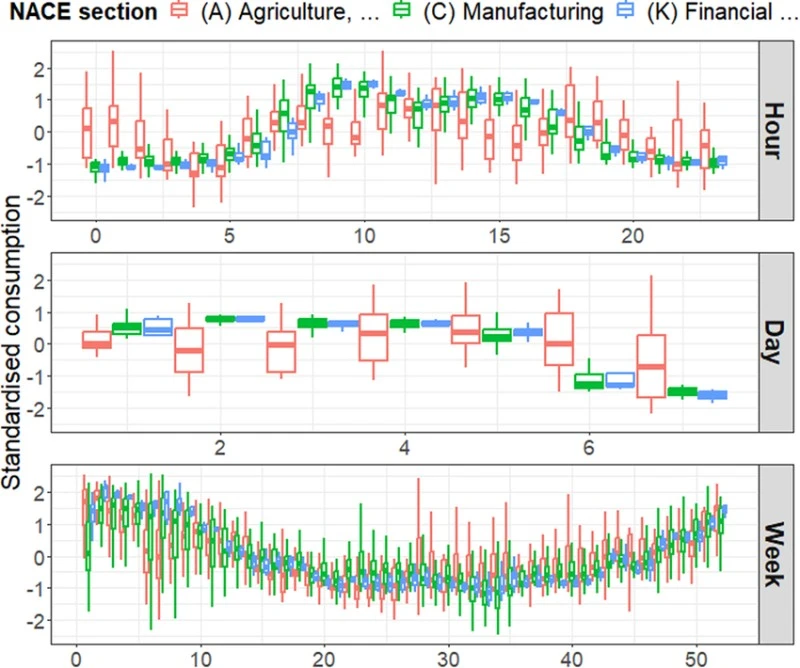
Data centers typically exhibit near-constant load demand with occasional surges during heavy computing cycles or server expansion. Accurate load flow analysis identifies voltage drops, transformer loading, and system losses, allowing engineers to size equipment correctly and prevent bottlenecks.
Power distribution usually follows this hierarchy:
- Utility Supply or On-Site Generation
- Main Switchboards and Switchgear
- Uninterruptible Power Supply (UPS) Systems
- Power Distribution Units (PDUs)
- Rack-Level Power Strips or Busways
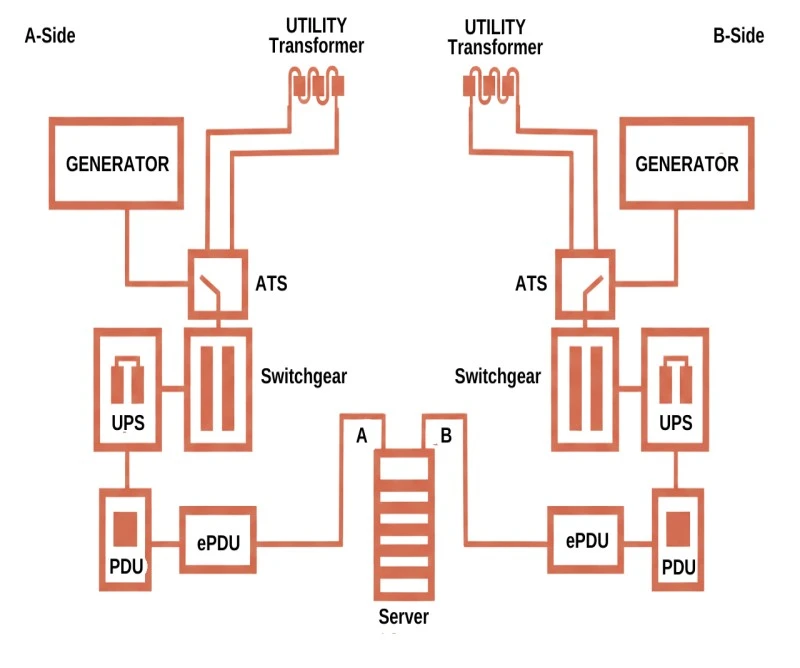
Each stage is interdependent, requiring redundancy and fault tolerance to ensure no single failure leads to downtime.
Redundancy Models
Redundancy levels define a data center’s tolerance to component failure:
- N: The minimum number of units needed to support the load—no redundancy.
- N+1: One extra unit for backup (e.g., one additional UPS or generator).
- 2N: Two fully independent systems, each capable of carrying the full load.
- 2N+1: Dual systems with an additional backup unit for maximum resilience.
Choosing the right redundancy model depends on operational goals, uptime requirements (as defined by Uptime Institute Tiers I–IV), and budget. Our engineers assess multiple design scenarios to find the optimal balance between reliability and cost.
Contingency analysis indicates the power system behavior due to outage of any equipment. To find out more about Contingency Analysis and how it is performed using power system software, read our blog on Contingency Analysis Using Power System Studies
Key Power Components
- UPS Systems: Provide seamless backup during outages and protect equipment from voltage disturbances. Modern UPS systems increasingly use lithium-ion batteries for improved lifespan and energy density.
- Generators: Automatically start when utility power fails, supporting the entire data center load until grid power is restored.
- PDUs (Power Distribution Units): Step down and distribute power from UPS outputs to IT racks while monitoring load balance.
- Battery Energy Storage Systems (BESS): Offer fast-response energy support and can integrate with renewable sources or peak-shaving programs.
Thermal Sensitivity and Cable Ampacity
Thermal management is a major consideration in data center design. Excessive heat can degrade cable insulation, reduce ampacity, and accelerate equipment failure. Accurate cable ampacity calculations ensure conductors operate safely under expected temperatures and airflow conditions.
Understanding the Neher McGrath Method
To calculate ampacity accurately, engineers often use the Neher–McGrath method, an analytical model that determines the temperature rise in electrical conductors based on:
- Current-carrying capacity
- Ambient temperature
- Conductor material and insulation
- Installation environment (air, conduit, buried, or in trays)
This method accounts for both heat generation and heat dissipation, providing more realistic ampacity values than simple lookup tables. In data centers, where cables may be grouped tightly and exposed to elevated ambient temperatures, this precision is vital for safety and reliability.
At AllumiaX, our thermal and ampacity studies combine IEEE 835 data with the Neher–McGrath approach to prevent overheating, voltage drop, and equipment derating.
Compliance with ASHRAE and NEC Standards
Two primary standards guide the electrical and environmental design of data centers: ASHRAE and the National Electrical Code (NEC).
ASHRAE Guidelines
The American Society of Heating, Refrigerating, and Air-Conditioning Engineers (ASHRAE) provides thermal guidelines that directly influence electrical system design.
Environmental Classes (A1–A4)
ASHRAE TC 9.9 defines allowable ranges for temperature and humidity:
- Class A1: Tight limits for high-reliability equipment.
- Class A2–A4: Wider operating ranges for energy-efficient data centers using economization or free cooling.
These classes help determine the cooling strategy, equipment placement, and derating factors for electrical cables and devices.
Cooling Systems
- CRAC (Computer Room Air Conditioning): Direct-expansion cooling; suitable for smaller facilities.
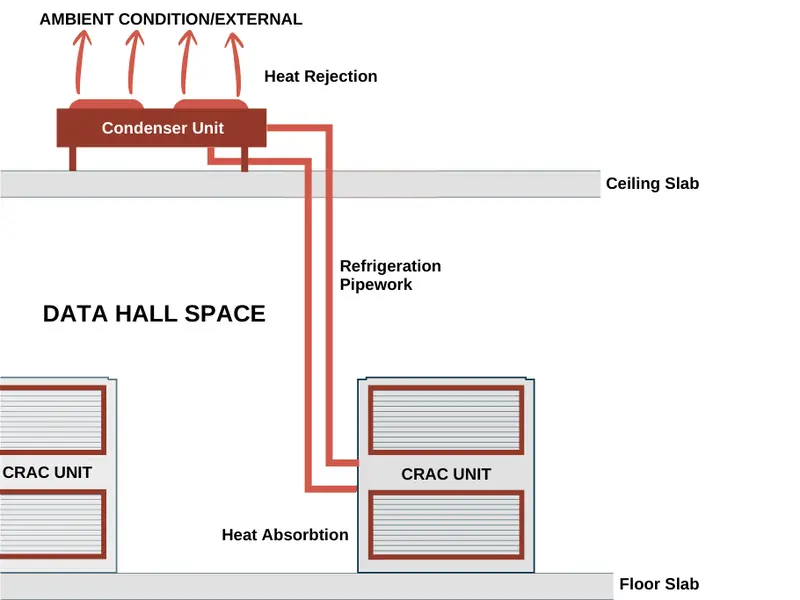
- CRAH (Computer Room Air Handler): Uses chilled water and centralized chillers; preferred for large, high-efficiency operations.
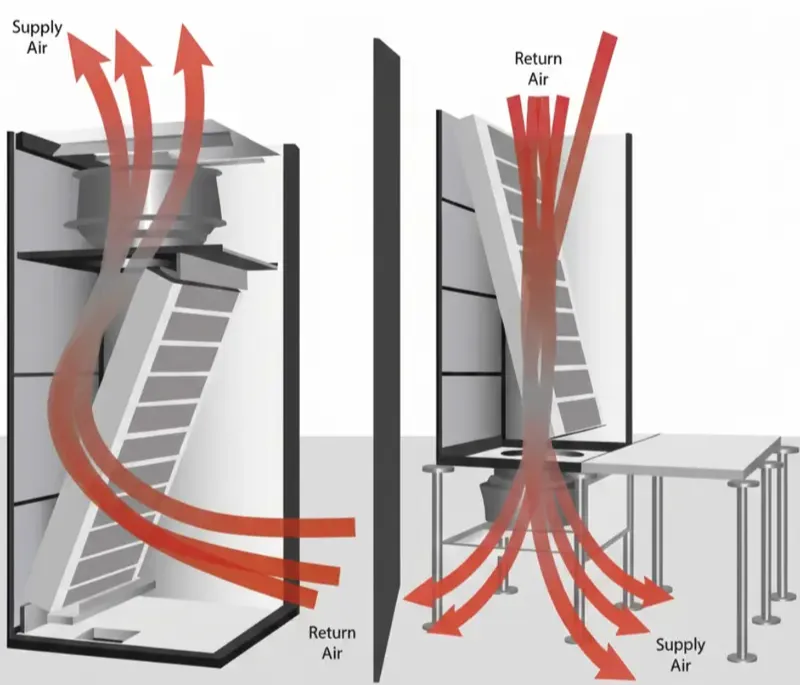
The selection of CRAC vs. CRAH impacts electrical loading, motor sizing, and redundancy strategies for cooling circuits.
Airflow and Humidity
Maintaining humidity between 40–60% prevents static discharge that can damage IT hardware. Proper airflow management—such as hot aisle/cold aisle containment—ensures even temperature distribution and avoids local hotspots that stress electrical components.
NEC Requirements
The NEC (NFPA 70) sets the foundation for safe electrical installations across all industries. Data centers, given their critical nature, must comply with specific articles and guidelines.
Article 645 – Information Technology Equipment
This article covers key aspects of IT infrastructure, including dedicated branch circuits for reliable power, emergency power-off (EPO) systems for safety, proper management of fire-rated penetrations and cables, and the importance of grounding and integrating air-handling systems to ensure safe and efficient operation. There are also additional NEC Articles that apply, such as Article 310 and 392 for ampacity and cable tray installations, Article 250 for grounding and bonding to prevent shock and fault hazards, and Article 240 for overcurrent protection and coordination. These NEC requirements ensure compliance with inspections, insurance policies, and workplace safety regulations.
Sustainability and Energy Efficiency
Today’s data centers are under pressure to deliver not only reliability but also sustainability. Integrating energy-efficient technologies and renewable power systems reduces operational costs and environmental impact.
Power Usage Effectiveness (PUE)
PUE = Total Facility Energy / IT Equipment Energy
Lower PUE values indicate better efficiency. Modern hyperscale data centers strive for values close to 1.1, meaning nearly all energy powers IT equipment rather than support systems. Power system studies help identify loss points—such as inefficient UPS operation, excessive transformer losses, or unbalanced loads—and recommend corrective actions.
Renewable Integration and Microgrids
Many facilities now deploy solar arrays, battery storage, and microgrid configurations for energy independence. Our engineers perform transient stability and protection coordination studies to ensure seamless operation when transitioning between grid-connected and islanded modes.
We recently published a blog on Renewable Energy Integration Challenges and Solutions in Power Systems. Discover the key challenges of integrating renewable energy into existing power infrastructure and explore practical solutions for a cleaner, more reliable energy future.
Comprehensive Power System Studies
AllumiaX Engineering provides specialized power system studies for data centers, emphasizing safety, reliability, and compliance with industry standards. Their Thermal and Ampacity Studies, based on Neher–McGrath and IEEE 835 methodologies, deliver accurate conductor sizing essential for efficient and reliable power distribution. Through Protective Device Coordination, AllumiaX ensures relays and breakers operate in the correct sequence, preventing unnecessary outages and reducing equipment stress. Their Arc Flash Hazard Analysis, performed per NFPA 70E, determines appropriate PPE levels and labeling to protect personnel from electrical hazards. In addition, AllumiaX supports facilities with harmonic analysis to identify and mitigate distortion issues that affect sensitive data center equipment and power quality. These studies are backed by detailed documentation, including coordination curves, relay settings, and arc flash labels, helping clients maintain safe, compliant, and high-performance electrical systems.


Abdur Rehman, PE
Author
Abdur Rehman is a professional electrical engineer with more than eight years of experience working with equipment from 208V to 115kV in both the Utility and Industrial & Commercial space. He has a particular focus on Power Systems Protection & Engineering Studies....
He earned his BSEE & MSEE from Washington State University in 2013 & 2017 respectively and an Engineering Technology Management degree in 2021.
Abdur Rehman is the CEO and co-founder of allumiax.com and creator of GeneralPAC by AllumiaX. He has been actively involved in various roles in the IEEE Seattle Section, IEEE PES Seattle, IEEE Region 6, and IEEE MGA.
Abdur Rehman is a board member of CordobaAcademy.org and enjoys local community volunteering. All AllumiaX blogs are special because of his love to share knowledge in the most intuitive way possible.
Stay Sharp & Join our Mailing List!
Subscribe to Allumiax Blog for updates on power system studies, tips, guides and insights on electrical engineering from industry leaders.

Recent Posts
Stay Sharp & Join our Mailing List!
Subscribe to Allumiax Blog for updates on power system studies, tips, guides and insights on electrical engineering from industry leaders.