
When to Renew Power Study and Why It Matters for Safety, Reliability, and Compliance
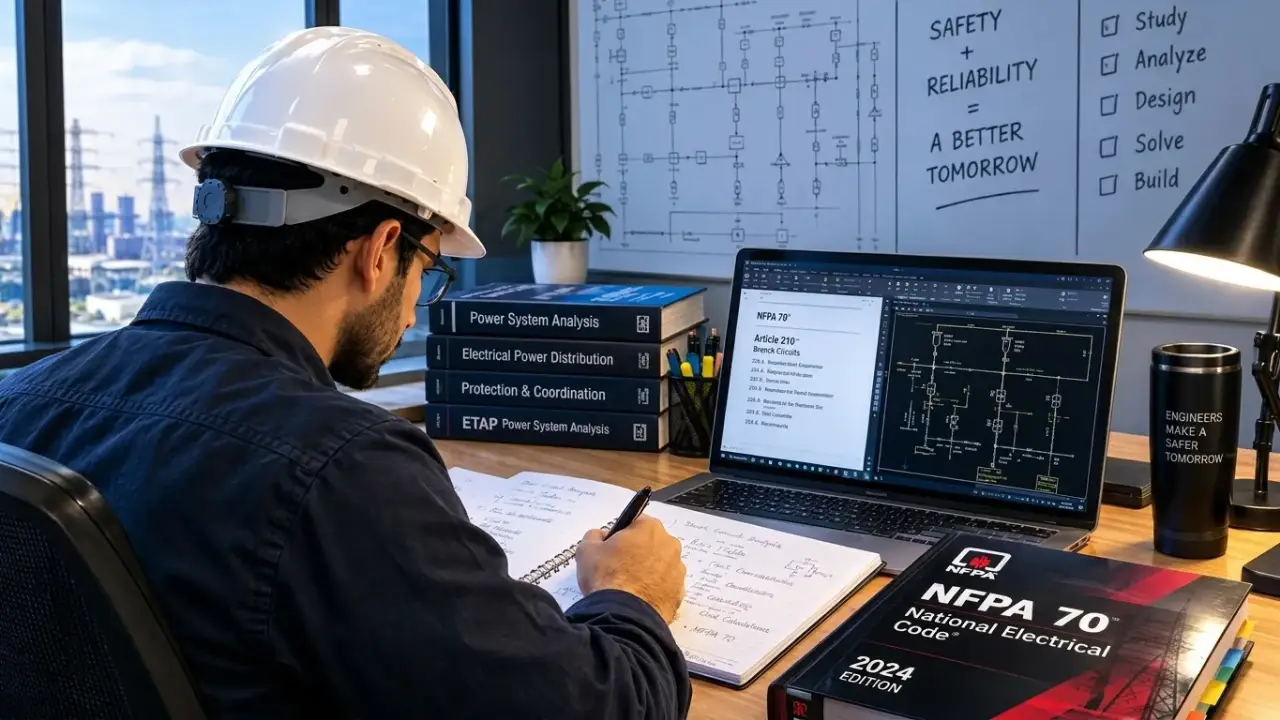
Most facilities run for years without giving their power system studies a second thought and if things are running smoothly, it's natural to assume the old study still holds up. But a power system study doesn't guarantee safety by itself; what it actually does is verify that your system's design still checks out, and flag the risks before they turn into real problems.
The catch is, systems rarely stay frozen in time. Equipment gets swapped, loads shift, protection schemes get modified, and safety standards evolve and any one of these can quietly make an older study inaccurate without anyone noticing. This article walks through when it's time to update your study, where NFPA 70E fits into the picture, the questions clients ask most often, and how Allumiax helps organizations keep their electrical infrastructure safe and compliant.
Significance of a Power System Study:
Power system studies should not be treated as one-time deliverables. They are living engineering documents that must accurately reflect the current/updated condition of an electrical system. As facilities expand and operational requirements evolve, the assumptions used in earlier studies can quickly become outdated.
Updating these studies is not simply a technical requirement it is a critical safety and operational responsibility. Even when a system appears to be functioning normally, underlying risks may still exist.
Why Power System Studies Must Be Renewed Every Five Years
No facility stays exactly the same for long. Loads increase, equipment gets upgraded, protective devices get swapped or reconfigured and over time, these changes usually add up in ways that quietly move a facility away from what the original study assumed. A study that was spot-on a few years ago can slowly fall out of sync with reality, leading to incorrect fault calculations, poor coordination, unsafe arc flash exposure, or compliance gaps you didn't know you had. And the tricky part is, the system can still look and feel like it's working fine on the surface. That's why renewing the study every five years isn't just a checkbox exercise it's a practical step toward keeping people, equipment, and operations protected.
Common Triggers That Necessitate a New Study
Common triggers that necessitate a new power system study are typically tied to any change that affects how the electrical system operates or how protection devices respond. These include the addition or replacement of major equipment such as transformers, generators, or large motors, significant load growth, modifications to protective device settings, or changes in the utility supply. Facility expansions, process upgrades, and even seemingly minor adjustments in system configuration can alter fault levels and coordination. In addition, outdated one-line diagrams, missing or inaccurate arc flash labels, and updates in safety standards like NFPA 70E are strong indicators that a study is no longer valid. Recognizing these triggers in early stage ensures that the system remains accurately modeled, properly protected, and aligned with both safety and compliance requirements.
Activities That Require Updating/Performing a Power System Study
| Activities | Activities Description |
|---|---|
| New Construction | New construction projects require a complete power system study to establish accurate system parameters, ensure proper protection coordination, and meet safety and compliance requirements before energization. |
| Addition of New Equipment | The addition of motors, transformers, or switchgear increases system load and fault levels, which can disrupt existing protection coordination if the study is not updated. |
| System Changes (Relocation / Upgrades / Power Sources) | Modifications such as equipment relocation, system upgrades, or changes in utility or backup sources can significantly alter system behavior and fault current levels. |
| Periodic Review (Every 5 Years – NEC Guidance) | Even without major changes, periodic updates are recommended to ensure the system remains aligned with current codes, standards, and operational conditions. |
| After an Electrical Incident | Events such as short circuits, arc flash incidents, equipment damage, or personnel injury indicate potential system issues and require immediate study validation and updates. |
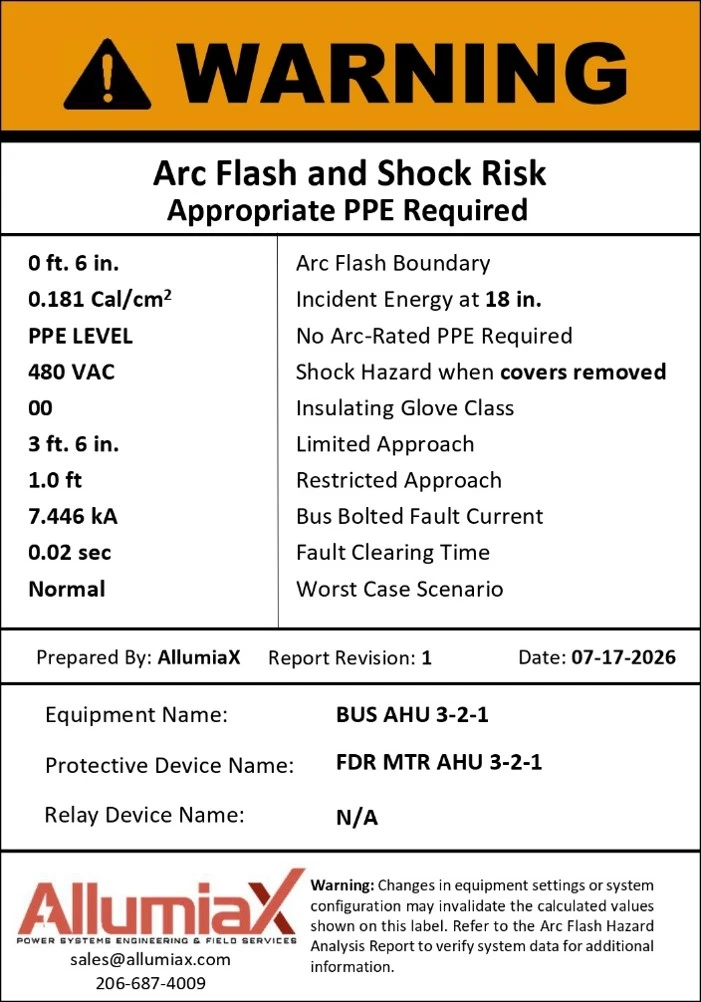
It is a logical and safe approach to labeling all the equipment to avoid hazardous conditions and injuries. An example of an arc flash Warning Label is shown below:
"My System Is Working Fine" A Costly Assumption in Business
If your system is running and nothing's tripped yet, it's easy to assume everything's fine. But steady-state operation only tells you the system is working right now not that it's safe, efficient, or ready for what's coming. Underneath a "normal-looking" system, things like outdated protection settings, incorrect fault levels, poor coordination, or unsafe arc flash exposure can quietly build up for years. And when they finally surface, the damage is almost always bigger and more expensive than the cost of a timely study would have been. That's the real value of proactive power system studies: they won't fix anything on their own, but they'll show you exactly where the risks are so you can act before something forces you to.
Possible Consequences of Not Renewing the Study
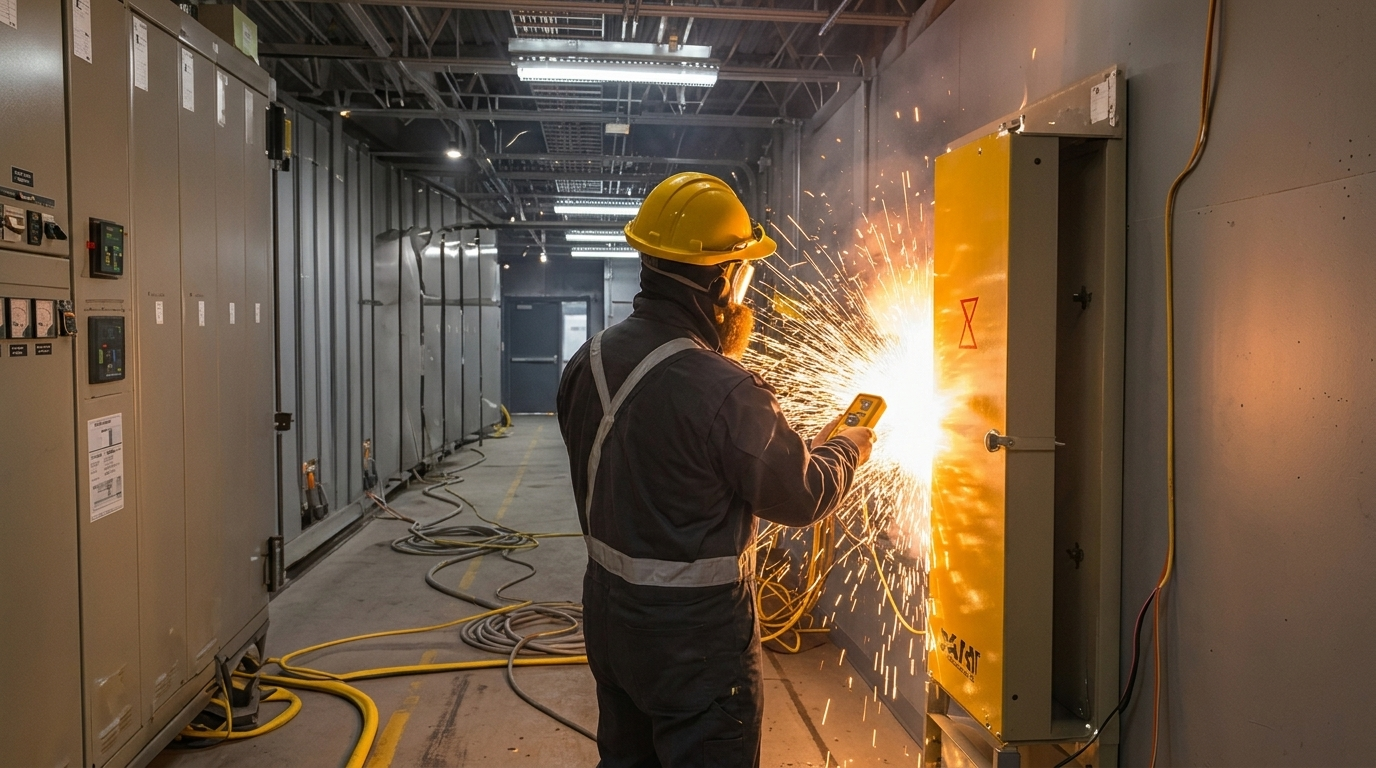
Not renewing a power system study can create serious risks that affect both technical performance and business operations. From an engineering point of view, outdated studies mean the system is no longer accurately modeled, which can lead to incorrect fault levels, improper protective device coordination, and unreliable arc flash calculations. This increases the chances of equipment not clearing faults correctly during abnormal conditions. From a client perspective, these technical gaps directly translate into real-world problems such as unexpected shutdowns, equipment damage, higher maintenance costs, and potential safety incidents. It can also result in non-compliance with safety standards like NFPA 70E, exposing the organization to legal and operational risks. In simple terms, a system may appear to be working fine, but without updated studies, both safety and reliability are no longer fully guaranteed.
What It Costs vs. What It Saves
Let’s look at this with clear eyes. A comprehensive power system study is a fraction of the cost of a single incident:
- A single arc flash incident can result in significant medical, legal & equipment costs
- OSHA willful violation fines: up to $165,514 per citation
- Production shutdown: days to months of lost revenue
- Insurance implications: claim denial or premium increases, depending on the type of coverage you hold
- Loss of workforce trust and company reputation
- Arc flash study audit-ready documentation that supports your NFPA 70E compliance
- Confirms alignment with required PPE, boundaries, and labeling standards
- Demonstrated due diligence: legal and insurance protection strengthened
- A study alone cannot guarantee full compliance; it can only support and strengthen it
- System reliability improved: coordination issues identified proactively
Numbers That Put “Nothing Has Happened Yet” in Perspective
2,000+
Arc flash injuries reported annually in US workplaces (OSHA)
400
Electrical-related worker fatalities per year in the US
$1M+
Average total cost of a single arc flash incident
$165k
Maximum OSHA fine per willful violation
OSHA’s General Duty Clause (Section 5(a)(1)) requires employers to provide a workplace free from recognized hazards.
If your facility hasn't conducted or updated an arc flash hazard analysis, that's not a gray area it's an unaddressed hazard putting your team and equipment at risk.
Beyond OSHA fines: The civil liability exposure from a serious electrical incident particularly if investigation reveals studies were outdated or never performed can reach into the millions. Insurance carriers are increasingly scrutinizing electrical safety compliance. Facilities without current studies have seen claims denied and premiums significantly increased.
Compliance with NEC NFPA 70E Code Requirements
Compliance with NEC and NFPA 70E code requirements is essential for maintaining both electrical reliability and worker safety. While the NEC ensures that electrical systems are installed properly, NFPA 70E provides the safety practices needed to protect employees from shock, electrocution, and arc flash hazards. Together, these standards help businesses reduce risk, avoid costly incidents, and maintain a safer, more compliant work environment.
NFPA 70E — What It Actually Requires From Your Facility
Referenced by OSHA | Compliance Expected | 2021 Edition
- Arc flash hazard analysis: Required for all electrical equipment that may need to be worked on while energized. Must be updated whenever system changes occur that could affect the analysis outcome.
- Equipment labeling: Applicable equipment (switchboards, panelboards, control panels, etc.) requiring energized servicing must be labeled with nominal voltage, arc flash boundary, and either incident energy, PPE category, or arc rating. Labels must reflect current, accurate study data.
- Periodic review: The standard calls for arc flash analyses to be reviewed when changes occur and at intervals not to exceed five years. This is not optional it's a documented requirement.
- Qualified worker training: Workers performing electrical tasks must be trained based on current study results knowing the boundaries, correct PPE, and safe work practices specific to your system.
- Energized work permits: When energized electrical work cannot be avoided, a formal work permit signed, documented, and condition-specific is required. A verbal “go ahead” doesn’t meet the standard.
- Documented due diligence: Your facility must be able to produce documentation demonstrating all of the above in the event of an incident or OSHA inspection. No documentation is treated the same as no compliance.
What Are the Next Steps?
1. Facility Assessment & Code Compliance Review
The first step is to evaluate the existing or new electrical infrastructure and identify any gaps in current code compliance. This includes reviewing system documentation, operating conditions, and ensuring alignment with NEC and NFPA 70E requirements.
2. Power System Study Execution (Partial or Complete System)
Based on the assessment, a detailed power system study should be performed for either selected portions or the complete electrical network. This ensures accurate short-circuit levels, protection coordination, and arc flash analysis based on real system conditions.
3. Implementation of Safety Recommendations
The final step involves applying the study findings to mitigate identified electrical hazards. This includes updating protective device settings, improving coordination, and implementing arc flash safety recommendations to enhance overall system safety and reliability.
- Arc Flash Hazard Analysis. IEEE 1584-2018 methodology, accurate incident energy at every bus
- Short Circuit Study. Fault current calculations, equipment interrupting ratings verified
- Protective Device Coordination. Selective coordination confirmed, maximum system reliability
- Arc Flash Labeling. NFPA 70E compliant labels installed at every required location
- Load Flow & Motor Starting. Voltage profile analysis, capacity and stability confirmed


Abdur Rehman, PE
Author
Abdur Rehman is a professional electrical engineer with more than eight years of experience working with equipment from 208V to 115kV in both the Utility and Industrial & Commercial space. He has a particular focus on Power Systems Protection & Engineering Studies....
He earned his BSEE & MSEE from Washington State University in 2013 & 2017 respectively and an Engineering Technology Management degree in 2021.
Abdur Rehman is the CEO and co-founder of allumiax.com and creator of GeneralPAC by AllumiaX. He has been actively involved in various roles in the IEEE Seattle Section, IEEE PES Seattle, IEEE Region 6, and IEEE MGA.
Abdur Rehman is a board member of CordobaAcademy.org and enjoys local community volunteering. All AllumiaX blogs are special because of his love to share knowledge in the most intuitive way possible.
Stay Sharp & Join our Mailing List!
Subscribe to Allumiax Blog for updates on power system studies, tips, guides and insights on electrical engineering from industry leaders.

Stay Sharp & Join our Mailing List!
Subscribe to Allumiax Blog for updates on power system studies, tips, guides and insights on electrical engineering from industry leaders.